
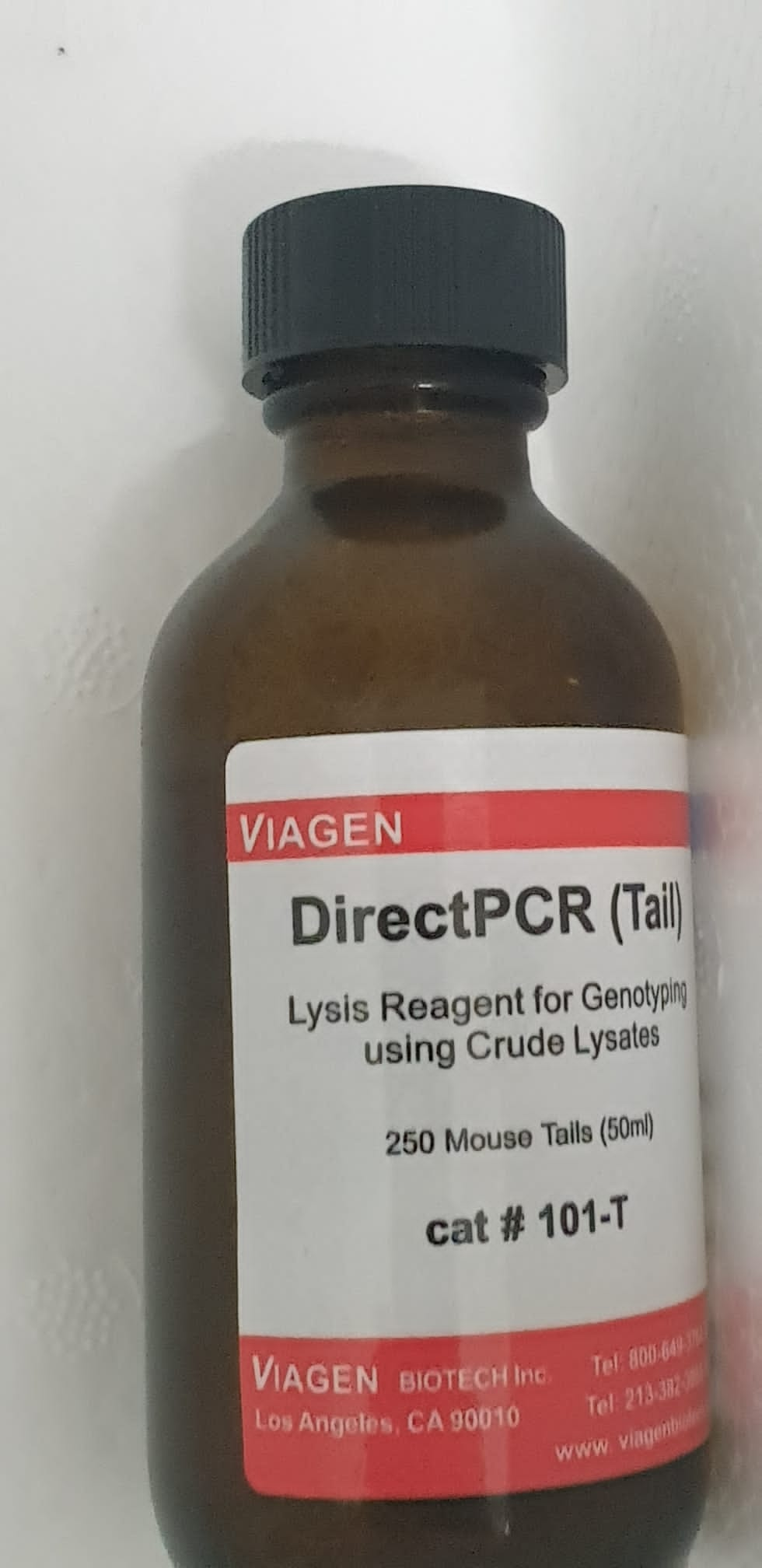
Description:
DirectPCR Lysis Reagent Tail (patent pending) was specially developed for the lysis of mouse tail tissue. After brief heat treatment, crude lysates are used directly for PCR without time-consuming genomic DNA isolation. Specialized DirectPCR products are available for the lysis of mouse ears, yolk sacs, or cultured mammalian cells.
Storage:
Store DirectPCR-Tail protected from light at 4-8°C. The reagent is stable for at least 6 months from the date of shipment under these conditions. Crystals may form during shipping or storage and should be dissolved by brief heating to 37°C before use.
Application notes
1. Complete lysis: Mouse tail pieces should be no more than 0.5 cm in length and should be completely immersed in lysis reagent. No large fragments of tissue should be seen after lysis.
2. Inactivation of proteinase K: Inactivation of proteinase K is achieved by incubation at 85°C for 45 min. This step is essential to avoid the digestion of Taq polymerase by proteinase K in the PCR reaction, Do not skip this step!
3. Amount of template: Use the smallest amount of lysate possible for the PCR reaction, as higher concentrations of DirectPCR reagent could inhibit the PCR reaction.
4. Tubes and evaporation: If the reaction volume is less than 200 μl during lysis, use 0.75 ml reaction tubes to limit evaporation.
5. Small Sample Volume and Dilution: If small amounts of tissue are to be lysed, dilute Lysis Reagent with water and increase the amount of lysate for the PCR reaction proportionally.
6. Troubleshooting: If PCR results do not match expectations, run a positive control with Genomic (pure) DNA, to exclude problems with the thermal cycler, PCR protocol, PCR reagents, or reaction method